• Home
  • /
  • Heritage
  • /
  • The Children of Moor Pool: Growing Up in a Garden Suburb

The Children of Moor Pool: Growing Up in a Garden Suburb

Today, children at Moor Pool enjoy community events, nature on their doorstep and open green spaces, but many of the things that make childhood here special have their roots in the original vision for the Estate. When Moor Pool was created in the early 20th century, it was designed as a place where families could thrive, with fresh air, gardens, and a strong sense of community at its heart.

A Playground on the Doorstep

Unlike the crowded inner-city streets where many Birmingham families lived at the time, Moor Pool offered space. The Estate’s tree-lined roads, gardens and green spaces gave children room to play and explore.

For the majority of the 20th century, much of childhood was spent outdoors. After school and at weekends, children would gather with friends to play games, ride bicycles, climb trees and go on adventures. Without television, computers or smartphones, entertainment often relied on imagination and friendship. The Estate itself became their playground.

"We had a boat, a sort of skiff, on the pool and my neighbours' children, they were a good deal older than I was, used to take me on the pool and go fishing for stickleback. We had jam jars and little nets and things. I don’t remember catching anything I must say."
Mary Saunders
Born at 5 North Gate in 1918
"We used to cycle round the Circle - the boys used to go one way, and we used to go the other and we would see if they could get us off our bicycles."
Pamela Bolton Frost
Born at 85 Moorpool Avenue in 1922
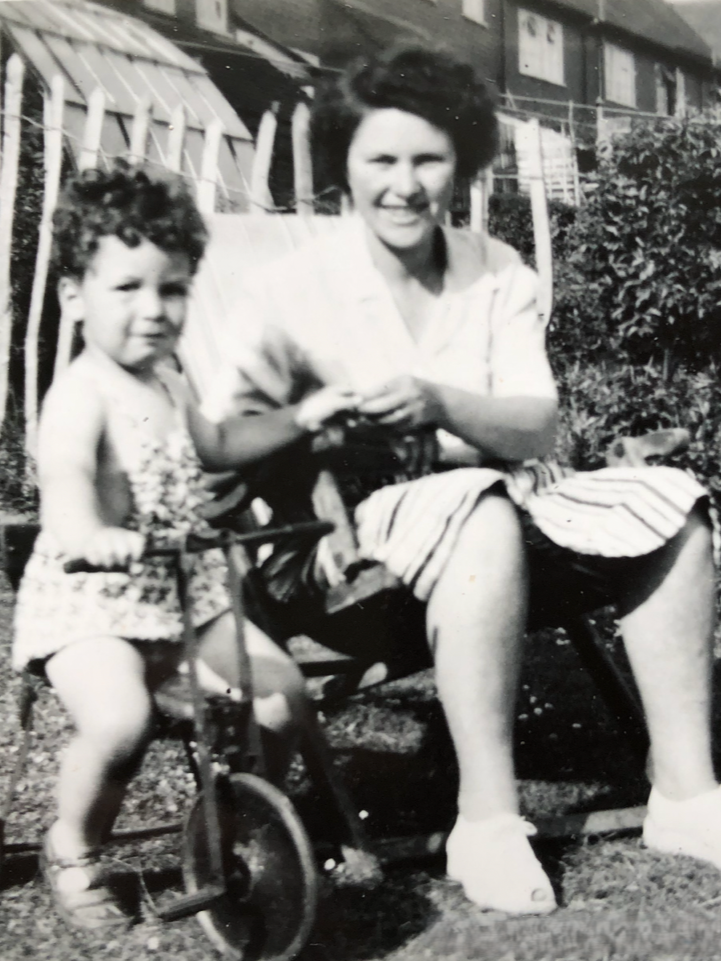
"At the back of our garden there were allotments, but there was also something we called The Sand Pit. You could ride a bicycle around, or tricycle in those days, and slide down the banks of the sand pit. Of course you got into trouble because you went home dirty. We used to run up and down the allotment paths playing hide-and-seek, hiding under the gooseberry and blackcurrant bushes and hoping that whoever owned the allotment didn’t appear."
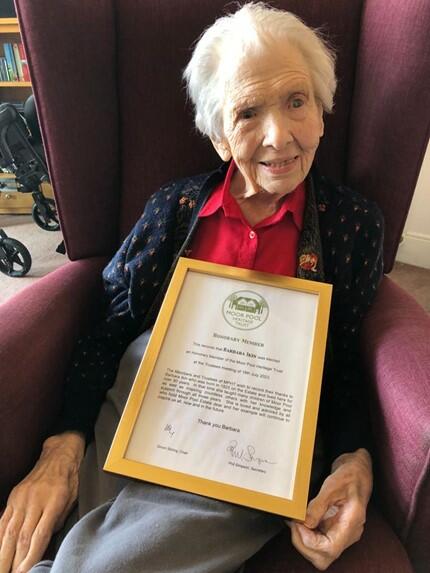
An older woman sitting in an armchair and holding a framed certificate
Barbara Ikin
Born at 42 Margaret Grove in 1925
"I always think that I had an idyllic childhood really. Here it was such a pleasant place to live, with places for us to play."
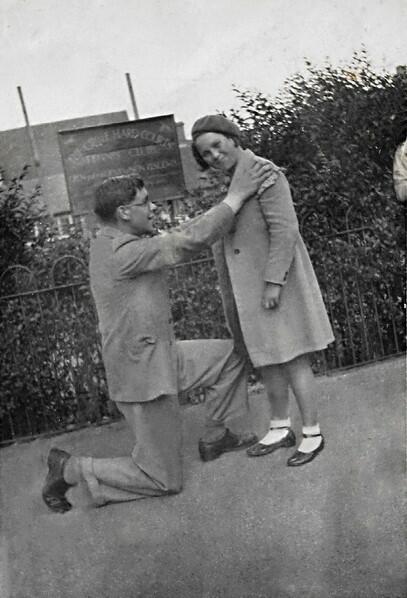
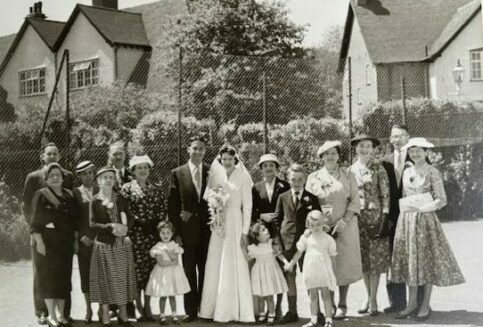
A black and white photograph of a wedding party stood on a tennis court
Hilary Everard
Born at 25 Margaret Grove in 1935
"We often played ‘Sardines’ which was a hide and seek game where one child would hide, usually in one of the passages, and everyone else had to find them. Each time they were found they would be joined until we were all crammed in together. With a dozen or more playing, the game could go on all day."
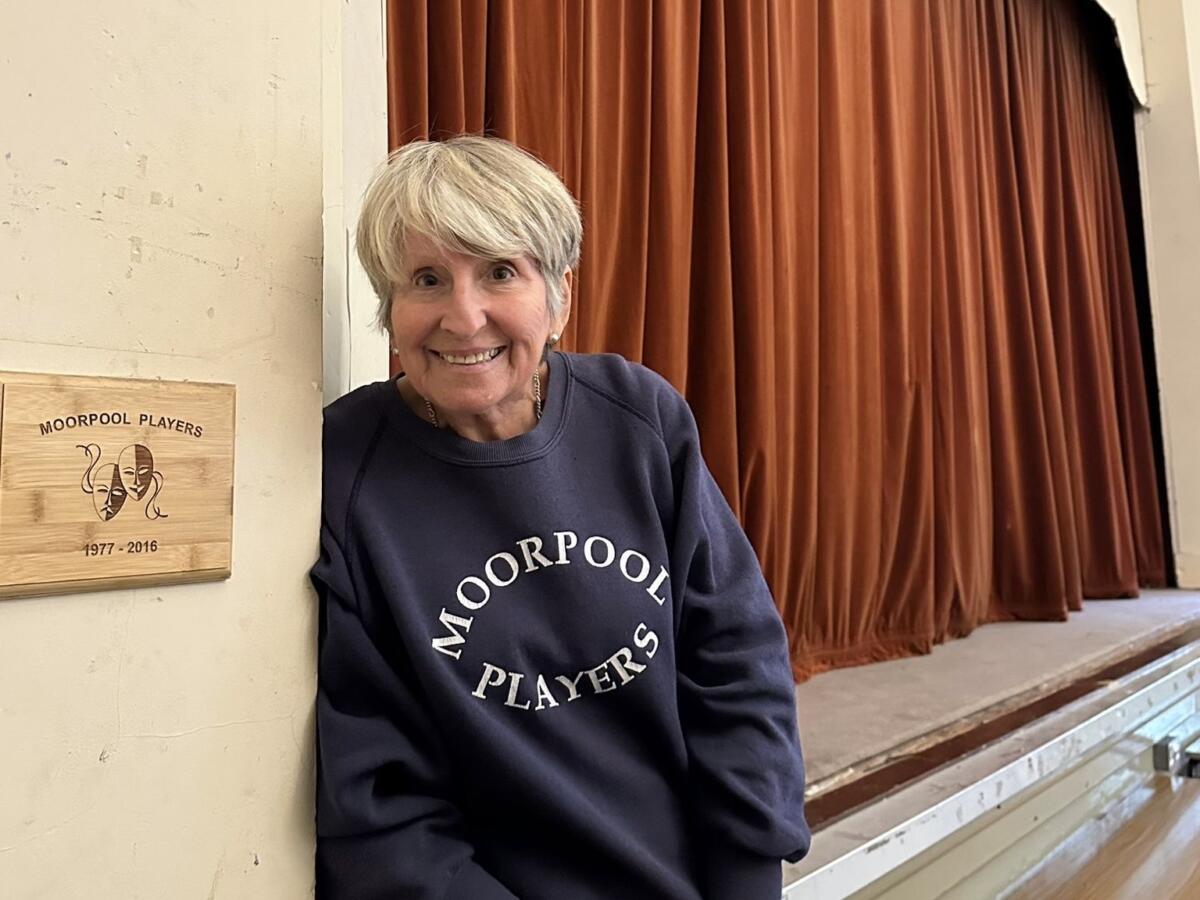
Norma Mason
Moor Pool resident since 1946
"As you turn into the Spinney off Carless Avenue, there is a magnificent old oak tree – this was our “Major Oak”, the centre of our Robin Hood games – and for us children in High Brow it seemed such a long way from home! As teenagers we started our own youth club – “The Coffin Club” in the basement of the then Post Office – happy days!"
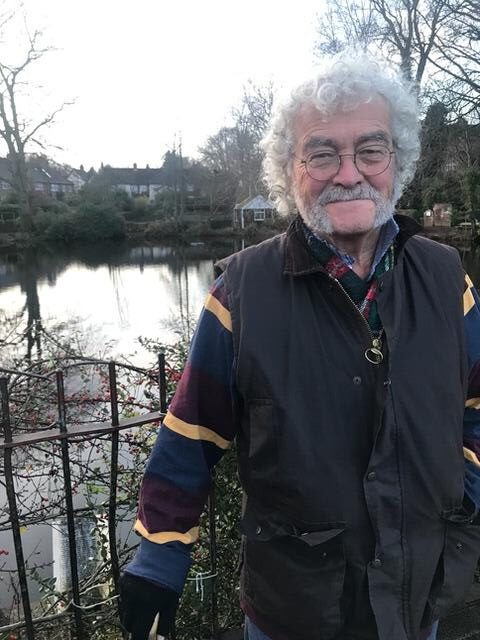
Mike Frost
Moor Pool resident since 1947
"When I was a little girl, the culvert from the Pool [which ran down where Winterbourne Lane garages are now] was largely open and so we used to play in it. I mean we were forbidden to go anywhere near the culvert, but of course we all did. You could actually go all the way underneath Margaret Grove and come out on the other side, and some of the bigger boys would do that. My father used to talk about the daring of going underneath Margaret Grove and going all the way through the culvert - games don't really change all that much do they?"
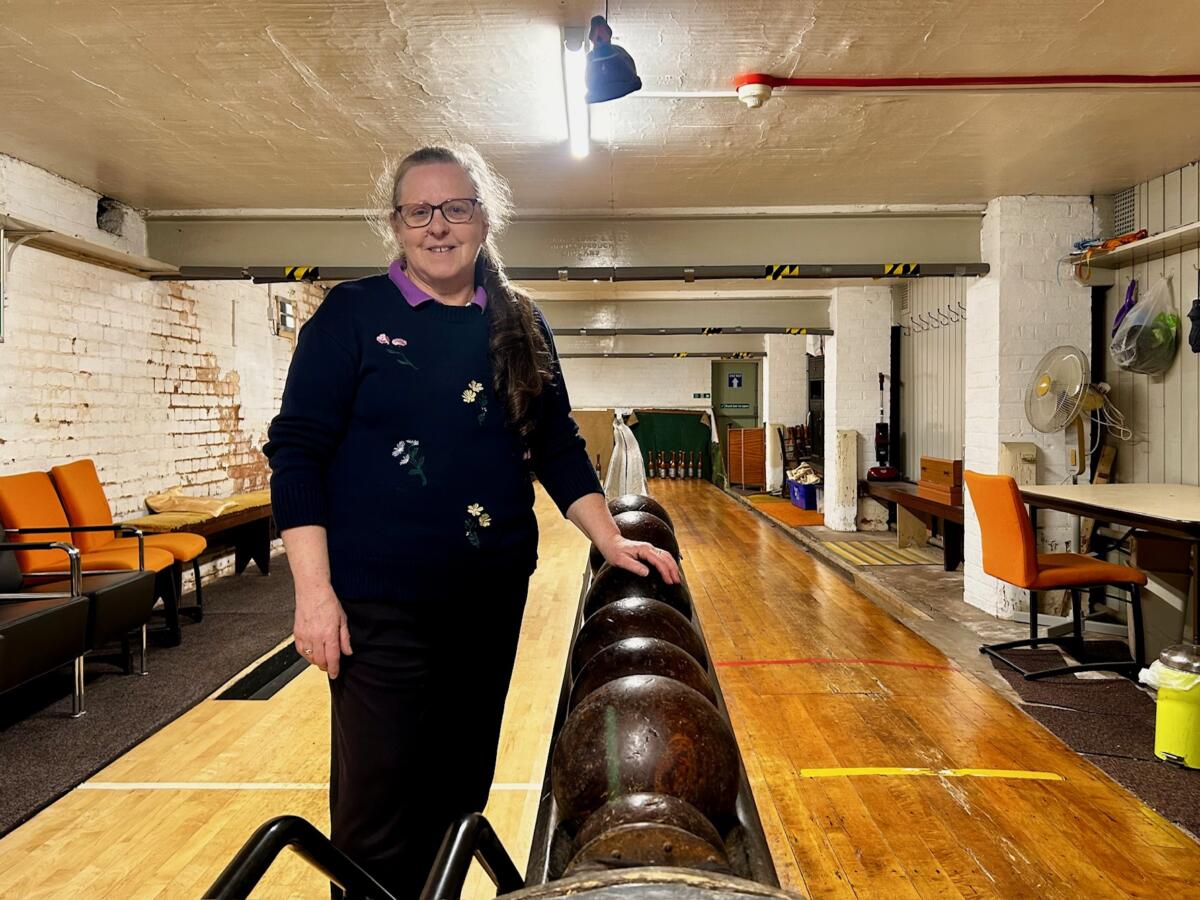
Tina standing next to a rack of bowling balls
Tina Hackett
Moor Pool resident since 1952
"I have memories of cycling with no cars about and watching my father and grandfather playing bowls."
Geoffrey Salminen
Moor Pool resident for over 70 years

Growing Up in a Close-Knit Community

One of Moor Pool’s founding principles was the creation of a strong and supportive community. Neighbours knew one another and children often grew up surrounded by familiar faces. Parents could feel reassured that friends, relatives and neighbours were never far away. Children played together across the Estate, forming friendships that often lasted into adulthood.

"There were a lot of children around. You could always find somebody to play with which was very nice. "
An older woman sitting in an armchair and holding a framed certificate
Barbara Ikin
Born at 42 Margaret Grove in 1925
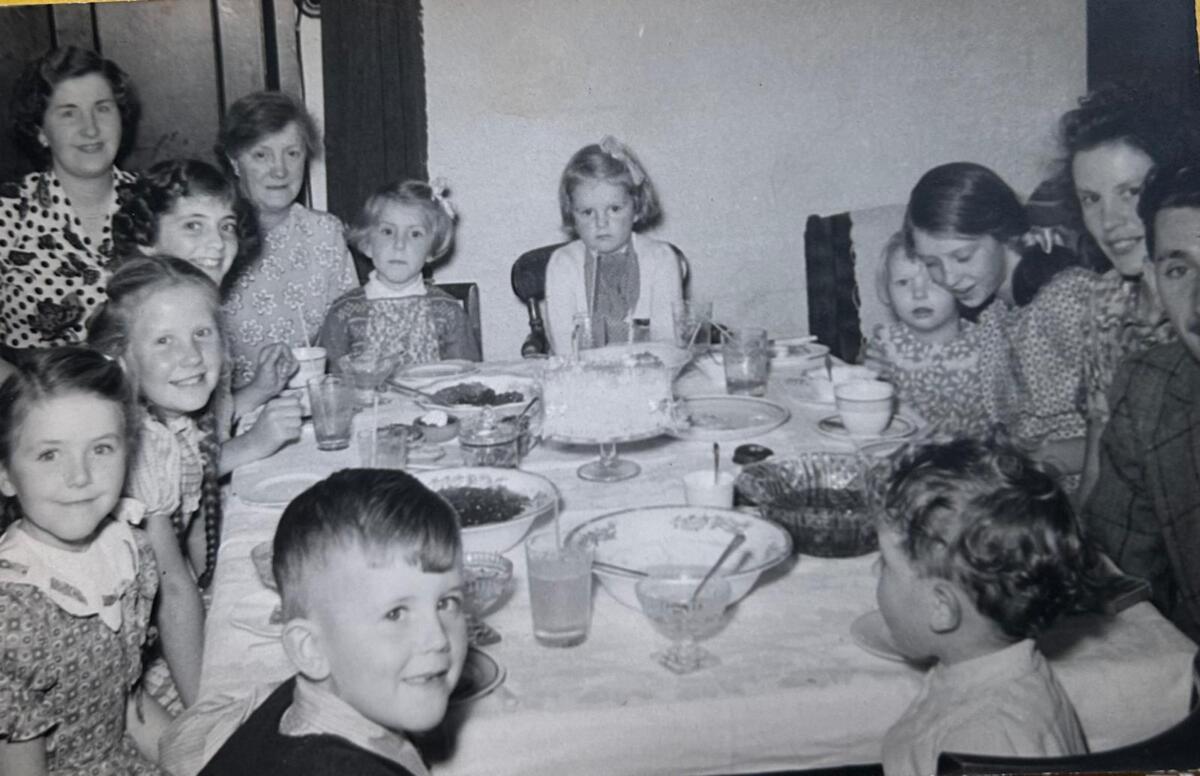
"There were a lot of children living in Moorpool Avenue and everybody was in and out of everybody's houses. Children would play together and go backwards and forwards. As a little girl, I spent a lot of time with my aunt down the road and it was quite nice to be able to pop down to see her. "
Tina standing next to a rack of bowling balls
Tina Hackett
Moor Pool resident since 1952

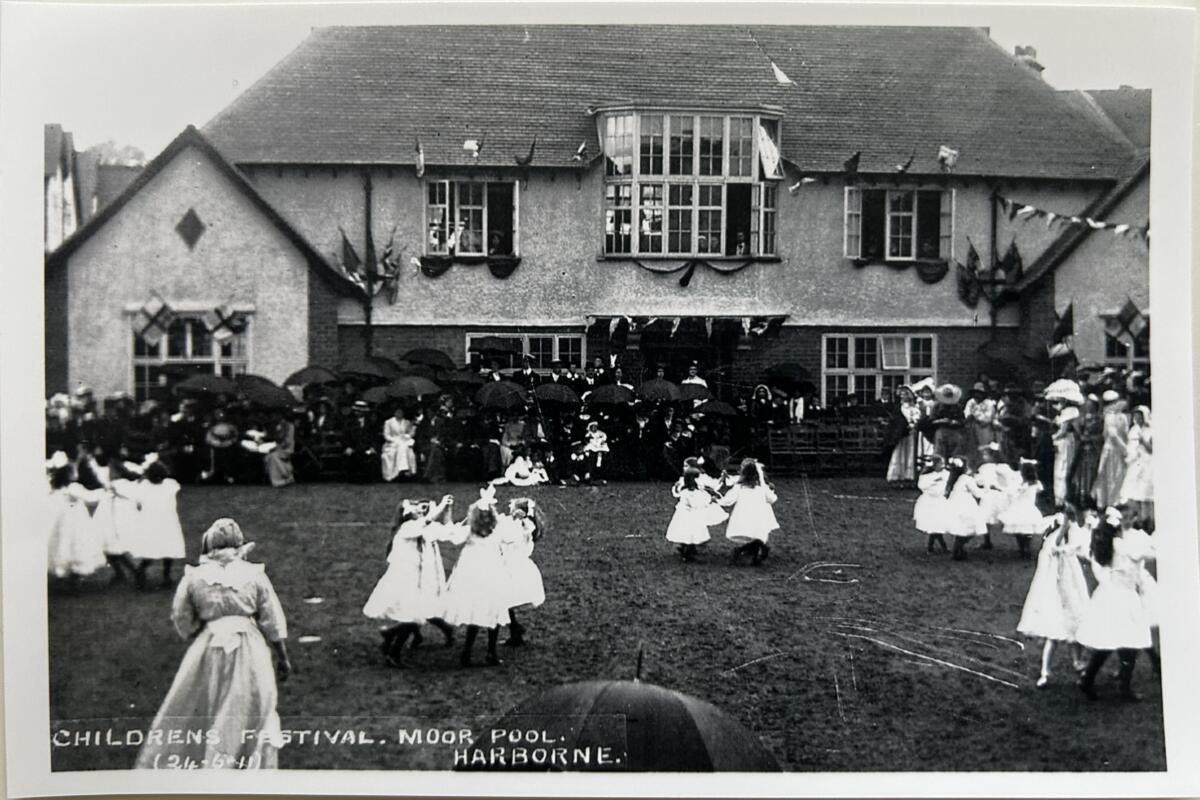
Community events brought people together throughout the year, helping young residents feel part of something larger than their own family. Whether attending celebrations, performances or social gatherings, children experienced a sense of belonging that was central to life at Moor Pool.

"I recall the excitement of the coronation celebrations of 1953 – procession, party and games (I came 3rd in the Potato Race!)"
Mike Frost
Moor Pool resident since 1947
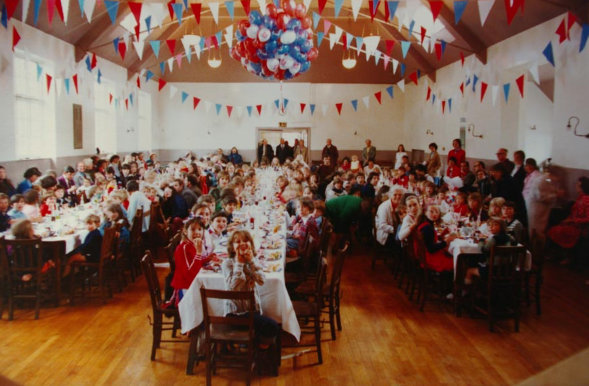
"For the Queen's Silver Jubilee in June 1977, there was a huge fancy dress parade, judged by the Lord Mayor, followed by a children’s party in the large hall, another party for the seniors and a very well attended dance the following evening."
Norma Mason
Moor Pool resident since 1946

A Legacy That Continues Today

Moor Pool’s planners believed that good housing could improve quality of life. They understood that access to fresh air, green spaces and community facilities would benefit families and children alike.

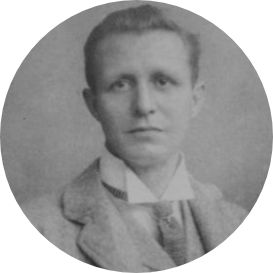
“It is fortunately becoming more and more recognised every day that open spaces are necessary to the health of the town, as streets are to its traffic.”
A black and white photograph of John Sutton Nettlefold
John Sutton Nettlefold
Moor Pool founder

The vision behind Moor Pool was remarkably forward-thinking – creating an environment where children could grow up healthy, active and connected to their community. More than a century later, modern research supports many of these ideas. Access to nature, opportunities for outdoor play and strong social connections are all recognised as important for children’s wellbeing and development.

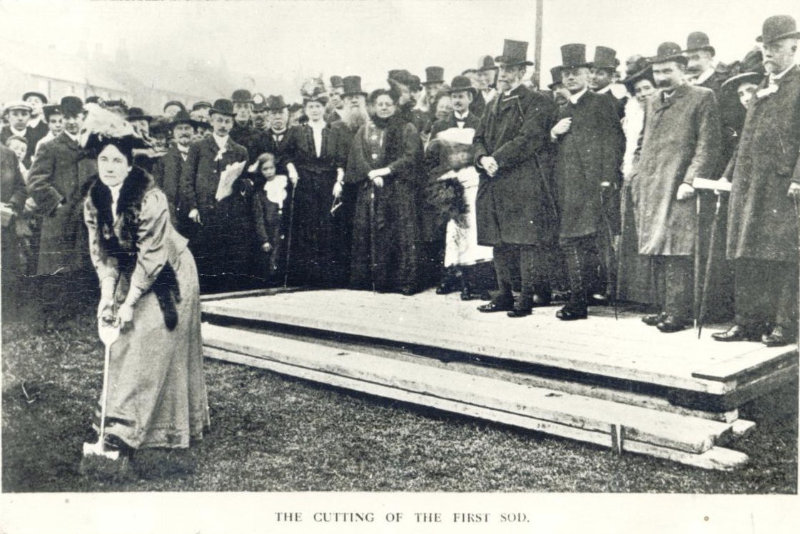
“There must be better houses, more air, more gardens, and more spaces for playgrounds for children.”
A black and white photograph showing a woman using a trowel to dig into the earth. There is a large group of people stood behind her.
Dr Gore
26th October 1907

While childhood has changed dramatically over the last hundred years, many of the qualities that made Moor Pool a wonderful place to grow up remain. Children still enjoy the Estate’s green spaces, community activities and friendly atmosphere. Families continue to benefit from the same thoughtful design principles that shaped the Estate from the beginning.

"I often walk around the estate and picture us hiding in the passages, running along the lane by the pool, scrumping apples, sitting on the hall steps until dusk, playing round the garages and passing front doors picturing where all those wonderful characters once lived. Times change and life moves on but I would like to think the families and children who are now fortunate to experience life on the Moor Pool Estate will go on to have their own special memories, just as I have."

Norma Mason
Moor Pool resident since 1946

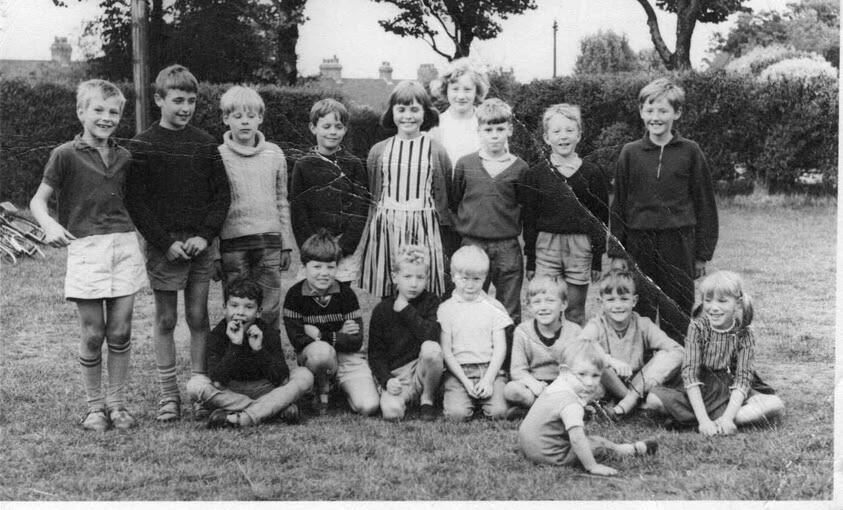
Cover photo of children on East Pathway in 1967